








Ask our optical dispensers

Ask Now

What is pupillary distance?

By Amanda Albuquerque
Reviewed by Maria Horan FBDO

Maria Horan FBDO

Reviewed by

Maria Horan FBDO
Maria holds a BSc Honours in Ophthalmic Dispensing and has over 17 years of optical experience.
PD is a key measurement that helps your lenses align with your eyes for clear, comfortable vision. Learn what PD is, how to measure it and why accuracy matters.

Overview

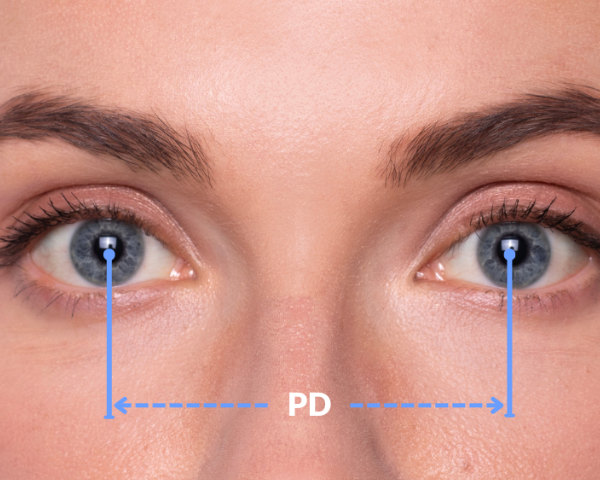
Pupillary distance (PD) is the distance between the centres of your pupils, measured in millimetres. Optical dispensers use it to place your lenses in the exact spot your eyes naturally look through.

An accurate PD ensures the optical centres of your corrective lenses line up with your eyes for clear, comfortable vision.

Why pupillary distance matters

Your PD measurement ensures each lens of your prescription glasses is aligned with your pupils, so light focuses exactly where your eyes need it. When this measurement is correct, your glasses feel natural and your vision stays sharp across the entire lens.

An incorrect PD can shift the specific point of the lens where light rays pass through, also known as the optical centre. This may leave your eyes working harder than they should.

Single PD vs dual PD

Your PD can be listed as a single number (the distance between both pupils) or as two numbers that measure each eye separately. Dual PD is often used for multifocals and stronger prescriptions because it gives greater precision.

EXPERT'S TIP!

“If you wear multifocals or have a strong prescription, get your PD measured professionally. Small shifts matter with multifocal lenses.”

Maria Horan, Dispensing Optician

How to get your PD

For accuracy and ease, use one of these options:

  • Digital PD tool: Use our online or mobile PD tool. It guides you step by step and gives you an accurate PD you can enter at checkout.
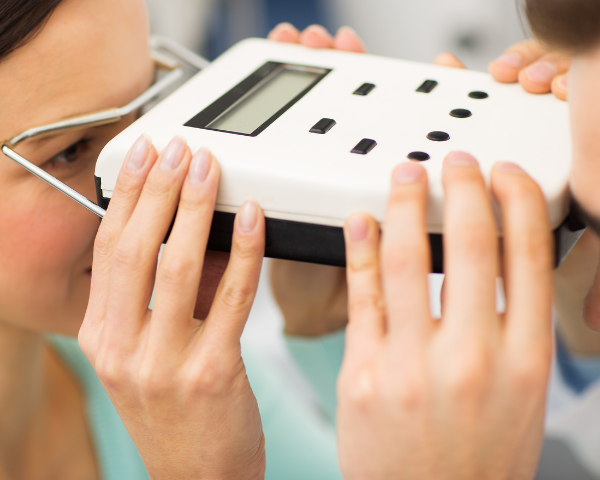
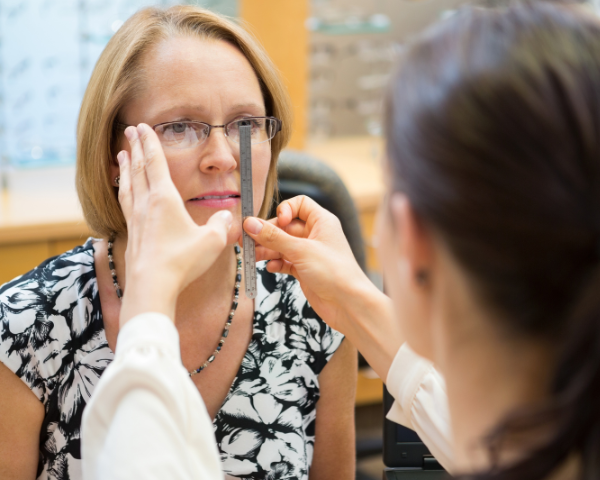
  • Professional measurement: Ask your optical dispenser to measure PD during an eye exam. This is the most reliable option and the one we recommend if you wear multifocals or have an unusual prescription.

Common PD ranges

Typical adult PD: about 54 to 74 mm

Typical child PD: about 41 to 55 mm

A value outside these ranges is normal. The number itself does not affect vision; accuracy does.

Your PD matters

Accurate PD is essential for clear, comfortable vision. If the optical centres of your lenses don’t align correctly, it can lead to blur, eye strain or headaches.

If you’re unsure of your PD, use our digital PD tool for guidance. And if you’re having trouble getting an accurate measurement online, we recommend visiting your local optical dispenser, who can take your PD in person and ensure the most precise result.

Need help now? Try our online PD tool, or speak with one of our certified optical dispensers.

Related articles

Pupils
Pupils Pupils - The black circular openings in the center of your eyes that control the amount of light entering...
View more
Eye Anatomy
Our eyes are made up of many parts that work together with the brain. They are critical in helping us...
View more

Related articles

Pupils
Pupils Pupils - The black circular openings in the center of your eyes that control the amount of light entering...
View more
Eye Anatomy
Our eyes are made up of many parts that work together with the brain. They are critical in helping us...
View more

Leave a comment

Your email address will not be published. Required fields are marked *